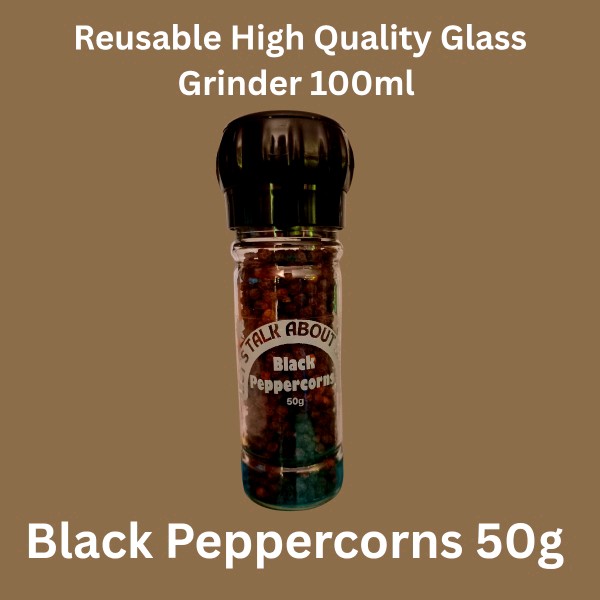
100ml Grinder - Black Peppercorns 50g
Product Price
R65,00
Description
Black pepper comes from the dried, unripe berries of the Piper nigrum vine. Native to India's Malabar Coast, it's processed by sun-drying berries until they shrivel and turn black. This 'king of spices' packs piperine—that sharp, warm kick you taste—and boosts nutrient absorption. Forget chili peppers; this stuff's been traded globally since Roman times. Use it fresh-ground for maximum flavor in everything from steak to soups.
So, What Exactly Is Black Pepper? Let's Cut Through the Hype
Here's the thing: you've probably got a shaker of this stuff on your table right now, but most folks don't know it's actually a fruit. Yep—those little black beads are immature berries from a flowering vine. Black pepper's magic lies in how it's handled. Farmers pick berries when they're still green, then spread 'em out under the sun. The drying process triggers enzymes that turn the outer layer black and develops that signature spicy heat. No artificial coloring or weird tricks—just nature doing its thing.
You know what's interesting? While we call it a 'pepper,' it's zero relation to bell peppers or chilies (those are Capsicum family). Black pepper's scientific name is Piper nigrum, and it grows wild in tropical regions like Vietnam, Indonesia, and its birthplace—India. Back in the day, it was so valuable they used it as currency.
When to Reach for Black Pepper (and When to Skip It)
You can ruin more dishes than you care to admit by misusing this spice. Let's keep it real: black pepper isn't universally perfect. Here's a no-BS guide from years of kitchen disasters and wins:
Seared meats or hearty stews ✅ Absolutely.....Grind fresh onto proteins before cooking—locks in flavor
Creamy sauces or light-colored dishes ⚠️ Sparingly......Use white pepper instead to avoid black specks
High-heat frying (above 400°F/204°C) ❌ Avoid..... Piperine breaks down—add after cooking for max kick
Raw salads or delicate fish....... ✅ Finely ground Use microplane for subtle heat without overpowerinG
The biggest mistake home cooks make is throwing pre-ground pepper into boiling pasta water. Don't do it—heat zaps the volatile oils. Save it for finishing. Oh, and if you're making a white sauce? Black pepper leaves ugly flecks. Swap to white pepper (same plant, just ripe berries with skin removed).
Spotting Quality Black Pepper:
Not all black pepper is created equal.
Go whole, not ground: Whole peppercorns stay fresh 2–3 years. If yours smells like cardboard? Toss it.
Check the color: Premium stuff is deep, uniform black—not grayish. Light spots mean uneven drying.
Squeeze test: Fresh peppercorns feel heavy and hard. Crumble one—should crack cleanly, not powder.
Beware 'pepper blends': Some cheap brands mix in cassia bark.
Store peppercorns in an airtight jar away from light. Humidity is the enemy—keeps them from clumping and ditch that dusty shaker refilled from bulk bins. Freshness matters more than you think.
Black Pepper vs. Other 'Peppers': The Real Deal
Let's clear up confusion once and for all.
Type......How It's Mad.......Flavor Profile
Black Pepper........Unripe berries sun-dried Sharp, woody, complex heat.......Most savory dishes
White Pepper......Ripe berries soaked to remove skin Milder, earthy, less floral Cream sauces, Chinese cuisine
Green Pepper.......Unripe berries preserved in brine/vinegar......Grassy, fresh, subtle heat Seafood, dressings
Chili Peppers.......Fruit of Capsicum plants Burning capsaicin heat.......Salsas, hot sauces
Fun fact: White pepper's popularity in French cooking? It's purely visual—keeps sauces looking pristine. But black pepper's got more piperine (that bioactive compound), so it actually helps your body absorb turmeric and other nutrients better. Science-backed win.