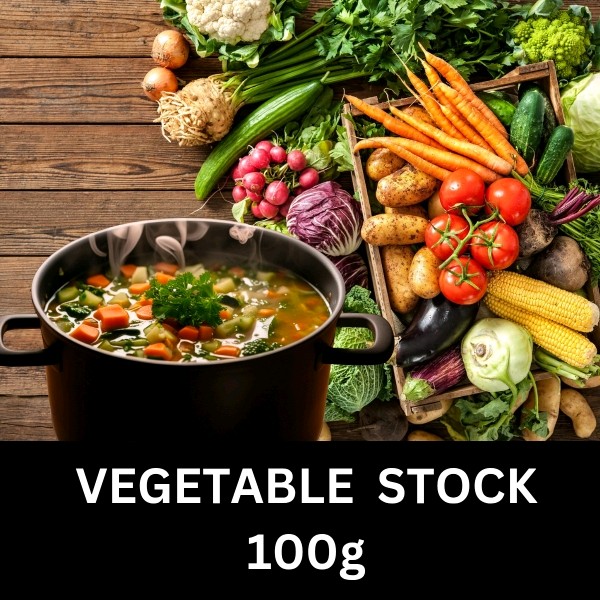
Vegetable Stock 100g
Product Price
R30,00
Description
Vegetable stock is a flavorful liquid base for cooking, made by simmering a variety of vegetables, herbs, and seasonings in water. It is a versatile ingredient used to add depth and richness to a wide range of savory dishes.
Composition and Preparation
Vegetable stock does not use animal bones (unlike traditional meat stock) and is therefore suitable for vegan and vegetarian diets.
Core Ingredients: Most recipes use a base of the classic "mirepoix" vegetables: onions, carrots, and celery. Garlic, parsley, thyme, and bay leaves are also common additions for aroma and flavor.
Preparation: Ingredients are simmered in water for a relatively short time (typically 30 minutes to an hour), then the solids are strained out, leaving behind the concentrated liquid. It is an excellent way to use up vegetable scraps and reduce food waste.
Customization: Additional ingredients like mushrooms (for an umami flavor), leeks, or parsnips can be added, while starchy or strong-flavored vegetables like potatoes, cabbage, or beets are generally avoided as they can make the stock cloudy, bitter, or change its color.
Uses in Cooking
Vegetable stock enhances the flavor of food more effectively than plain water and is considered a staple ingredient in many kitchens.
Common uses include:
As a base for soups, stews, and casseroles.
Instead of water when cooking rice, risotto, or pasta, to add significant flavor.
For making sauces and gravies.
For poaching fish or other ingredients.
Stock vs. Broth
The terms "vegetable stock" and "vegetable broth" are often used interchangeably in modern cooking.
Technically: Traditional culinary definitions state that "stock" is made from bones and contains collagen (making it gelatinous when cool), while "broth" is a lighter liquid made from simmering meat or vegetables.
In practice: Since vegetables have no bones, the resulting liquid is technically a broth, but it can be used in recipes that call for either stock or broth. Stock is generally unseasoned, allowing cooks to control the final flavor profile of their dish, while broth is often pre-seasoned and can be enjoyed on its own.